Thursday, May 28, 2020

New Program Helps Children With ADHD Learn to Read

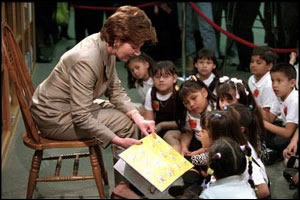
File:SAD Hortons Kids 104 (9606789399).jpg - Wikimedia Commons

Studies show that attention deficit hyperactivity disorder (ADHD) remains a problem with youth in the U.S.

According to a study by the Mayo Foundation for Medical Education and Research, 7.5 percent of children are diagnosed with ADHD by age 19. Those affected by the disorder are more likely to experience learning problems in areas such as reading and writing.

Many of these difficulties are due to problems with decoding, comprehension and retention. Some signs that a child is having trouble with these tasks are as follows:

* Having problems sounding out words and recognizing words that are out of context.

* Reading orally at a slower rate than most children of the same age.

* Confusing the meanings of words and sentences.

* Showing difficulty in distinguishing significant information from minor details.

* Having trouble remembering or summarizing what is read.

Fortunately, there is hope for children with ADHD who are having trouble reading and writing. For many, the answer lies in watching movies, such as the ones developed by SFK Media Specially for Kids Corp.

ReadENT learning system is a patented program that uses "Reading Movies" to help children with special education needs develop reading and language skills while being entertained. 

These movies use an innovative tool called "Action Captions" that shows spoken words on screen in real time, without disrupting the flow of the movie. By providing these visual words, the movies make it easier for viewers to grasp language concepts and build vocabulary.

ReadENT Reading Movies are available as interactive DVDs of the classic children's movies "20,000 Leagues Under the Sea," "Tales of Gulliver's Travels" and "The Trojan Horse." They also come with interactive games and quizzes to make the learning experience even more fun.


Tips to Teach Your child How to Read

Free Images : teacher, family, parenting, together, people, child ...
Learning to read at a young age is important for the development of the child. It helps them develop a better understand of their surroundings, allows them to gather information from printed materials, and provides them with a wonderful source of entertainment when they read stories and rhymes. Children develop at different rates, and some children will develop reading skills quicker than other children; however, what's important is that as the parent, you are keenly aware of your child's maturity and reading level to provide them with appropriate books and activities to help them improve.
As parents, you are the most important teacher for your children. You will introduce your child to books and reading. Below we have some tips to help you teach your child to read.
Teach Your Child How to Read Tip #1
Teach your child alphabet letters and sounds at the same time. Studies have shown that children learn best when they are taught the letter names and letter sounds at the same time. In one study, 58 preschool children were randomly assigned to receive instructions in letter names and sounds, letter sound only, or numbers (control group). The results of this study are consistent with past research results in that it found children receiving letter name and sound instruction were most likely to learn the sounds of letters whose names included cues to their sounds. [1]
When teaching your child the letter sounds, have them slowly trace the letter, while saying the sound of the letter at the same time. For example, if you were teaching your child the letter "A", you would say:
"The letter A makes the /A/ (ah) sound."
Then have your child say the /A/ sound while tracing the letter with his or her index finger.
Teaching a Child How to Read Tip #2
When teaching your child to read, always emphasize with them that the proper reading order should be from left to right, and top to bottom. To adults, this may seem so basic that anyone should know it. However, our children are not born with the knowledge that printed text should be read from left to right and top to bottom, and this is why you'll sometimes see children reading from right to left instead - because they were never explicitly taught to read from left to right. When teaching your child how to read, always emphasize this point with them.
Teach Your Child How to Read Tip #3
Teach final consonant blends first. Teaching words such "at" and "and" can lead your child directly to learning words that rhyme with these. For example, for "at", you can have:
Lat
Pat
Mat
Cat
Sat
Bat
Spat
Chat
For "and", you can have these rhyming words:
Sand
Band
Land
Hand
Stand
Bland
Brand
Grand
and so on...
You can start teaching blends once your child has learned the sounds of some consonants and short vowel sounds. You don't need to wait until your child has mastered the sounds of all the letters before teaching blends.
Learning to read is a long process, but it doesn't have to be a difficult process. Broken down into intuitive and logical steps, a child as young as two years old can learn to read, and older children can accomplish even more

Homeschooling online


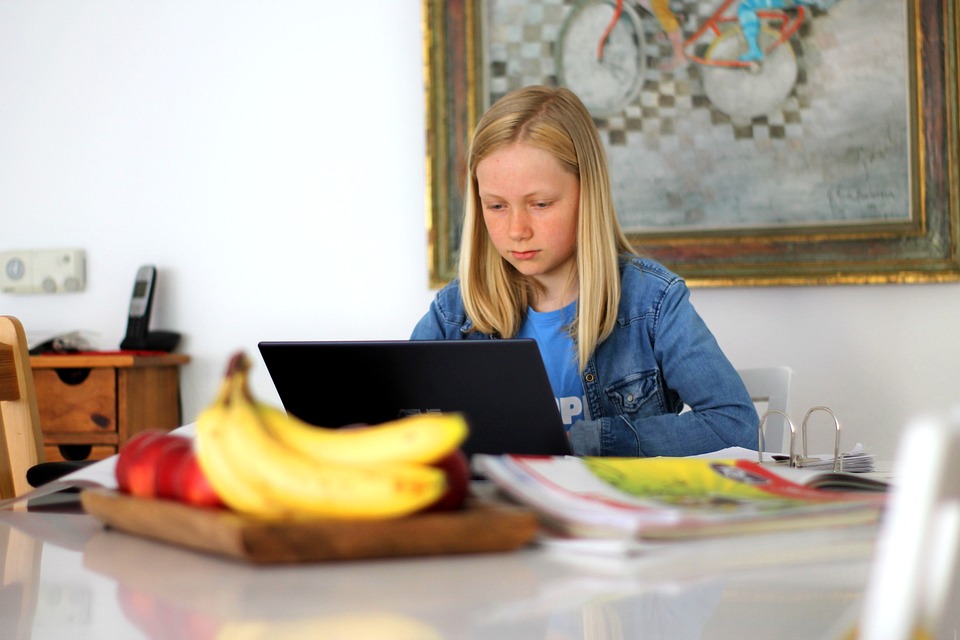
  1. Homeschooling School Technology - Free photo on Pixabay

If Johnny is fascinated by the blinking cursor and struggles to
master the movements of the mouse, you may want to look into some 
of the recent developments in homeschooling techniques. Gone are 
the days when parents had to buy material from vendors and then 
pass it on to their children with explanations. Today, you get the 
full course details, material and test papers online.

Children love to sit with the computer. In addition to making them 
feel like an adult, the computer also makes use of the visual and 
sound medium to make learning fun and easy. Streaming video and 
audio show various scientific processes in great detail. The 
colorful pictures and the various techniques used help to 
effectively bind the data to the child's memory.

Many online resources have a fun testing center that aims to 
measure the knowledge and skill level of your child. Complicated 
math and science problems are dealt with deftly and elegantly.
A visit to an e-library can also be fun, especially when there 
is an audio clip that reads out the passage to you. 

E-learning has just begun to revolutionize the world of studies. 
If harnessed properly, a child can assimilate an astonishing 
amount of information from that great resource sitting right there 
at your table - your P.C.

How to Homeschool Your Child

kabongo kids reading | goodncrazy.com | Carissa Rogers | Flickr

Now that you have decided that homeschooling is the way to educate 
your child, get ready for the ecstasy and the anxiety - the road 
ahead is a bit bumpy, but the rewards more than make up for it. 
Producing a well-adjusted and well-rounded personality is no mean 
achievement.

First of all, it is important to check out your state laws on home 
schooling. Some states need an affidavit filed with the State's 
education department. There are basically 3 categories for 
homeschooling laws. These are: private school laws, home education 
laws and equivalency laws. Find your state laws. You may also need 
to maintain a portfolio that records the child's educational 
progress. It is important to look into the legal requirements 
BEFORE you start homeschooling. Some States also stipulate a 
minimum educational qualification for the parent or teacher. 

Next, look for a support group. If you live in a friendly or 
curious neighborhood, well-meaning friends will try to dissuade 
you. At the very least, they may put a lot of uneasy questions in 
your mind. A support group that consists of like-minded people 
will insulate you from the criticism, pressures and questions of 
regular school-goers. Many groups organize fun events like visits 
to the zoo, museum, tours to the ice cream shops etc. And if your 
children hit it off with other homeschoolers, they will be able to 
build lasting relationships that do not fade when their friends 
change schools. These groups provide an important avenue for 
socialization.

The next important thing to do is to select a curriculum. 
Depending upon the method of homeschooling, you may choose various 
tools that aid you in this process. The internet is also a rich 
resource for homeschooling. Do some research and look into the 
material that is available. 

Set certain ground rules. Homeschooling requires a lot of 
self-discipline and hard work. Here is a comprehensive list of the 
things you will need:
1) Eagerness to learn
2) Hard work and effort
3) Discipline
4) Time and patience
5) Flexibility
6) Enthusiasm

Consider why you want to opt for homeschooling. Your motives and 
your reasons are important pillars on which the whole edifice of 
your child's lessons depends. Also, consult with your children. 
Ask them what they feel about homeschooling. 

Select a curriculum or custom-make a curriculum that best suits 
your child. Record keeping is an important part of homeschooling. 
Look into the various methods of record keeping. Set up a 
schedule. Your child does not have to learn 6-7 hours a day. Allow 
him or her to dictate the time. Flexibility and fun are the 
cornerstones of homeschooling. Do not stuff too many skills into a 
single term or year. Prepare a skill list. Make the child learn 
the skills that he is ready for. 

Gentle parenting is the secret to successful homeschooling. 
Children make great advances in learning and show more enthusiasm. 
They also turn out to be surprisingly well balanced and well 
informed when they are taught at home. 

Benefits Of Homeschooling

Home schooling offers learning, lifestyle choice > Keesler Air ...

Why let Tim and Lisa learn at home than send them to school? 
Well, first of all, you don't have to wake them up at 7 every 
morning and bundle them off to school with umpteen numbers of 
instructions, and wait with an anxious heart till they return. 
Homeschooling gives you more control over the influences that 
affect your child. The growth and development of your child 
is removed from the realm of the unknown. You, and you alone 
can decide what your child needs to do or learn. Tailoring 
the curriculum to suit the needs and interests of the child 
is one of the most obvious benefits of homeschooling

Individual attention is another salient benefit of 
homeschooling. For instance, if Lisa needs more time to learn 
Math, then she can reduce the time for her English lessons. 
There are no fixed hours of learning per subject. This means 
that a child has the advantage of assigning more number of 
hours to the subject that seems tough WITHOUT any additional 
pressure. The amount of time needed to learn each subject 
will depend on the abilities and interests of the child. 

The schooling of the child becomes an extended family activity. 
Parents get involved in every step of the learning procedure. 
Field trips and experiments become family activities. Thus, 
the child receives more quality time with his parents. The 
entire family shares games, chores and projects. Family 
closeness becomes the focus here. The child is also free of 
any negative peer pressure while making choices and decisions.

Competition is limited when it comes to homeschooling. The 
child does not need to prove his ability with regards to other 
children. His confidence remains intact. Since parents have a 
deep understanding of their child, they can plan the learning 
program to pique the child's interest. It is also possible to 
intersperse difficult tasks with fun activities. A tough hour 
with Algebra can be followed by a trip to the nearest museum. 
Learning becomes fun. Parents can also tailor the curriculum to 
suit the learning style of the child. Some children learn through 
reading, while others need to write, and still others need to see 
objects in action. 

Homeschooling allows parents to take control over the moral and 
religious learning of the child. Parents have the flexibility to 
incorporate their beliefs and ideologies into the child's curriculum. 
There is no confusion in the child's mind either because there is 
no variation between what is being taught and what is being practiced. 

Lastly, more and more parents are getting disillusioned with the 
public school system. They believe that their children are being 
pushed too hard or too little. Other worrying issues pertaining to 
discipline and ethics also make the school system less welcome. Many 
repudiate the educational philosophy of grouping children solely on 
the basis of their age. Some parents themselves have unhappy memories 
of their own public school experience that motivates them to opt for 
homeschooling when it comes to their own children.  

Homeschooling is the best way to teach a child if you have the time, 
the ability and the interest to follow through with his education. After 
all, nobody can understand or appreciate your child more than yourself.

What Are Your Kids Reading?

Free Images : grass, read, people, lawn, play, cute, picnic ...

Responsible parenting is very much on everyone’s mind these days. Everywhere you look there are articles being written about it, television shows and videos which aim to alert parents to potential dangers facing their children, and websites and home pages filled with useful and helpful tips. The concerned parent has never had as many tools or as much information available to them to protect their children. 

But, what are your kids reading?

Yes, that’s right, reading. Ten years ago, I read an article which said that reading skills in America ranked among the lowest in the industrialized nations of the world. The printed word was no longer viable, the interactive game was in, and civilization as we knew it was over. LCD readout had eplaced ink on paper as far as kids were concerned, and there was nothing that anybody could do about it. 

And then along came J.K. Rowling, Lemony Snicket, and a number of others and BANG – according to Publishers Weekly, the Children’s/Young Adult book market is the fastest growing market in publishing! Tens of millions of books per year are printed for the 6-15 year old market, encompassing thousands of titles and hundreds of different sorts of subject matter. Go to any local library and the odds are that you will find that the Children’s/Young Adult section is one of the largest there is. And, of course, as children grow older and their reading skills continue to improve, the entire world of adult literature becomes available to them. 

This, of course, is not a bad thing – however, even though a child has the skills to read something, the responsible parent needs to ask themselves: But do I really want them reading that yet? Is it, for example, appropriate for 8 year olds who have the skills to do so to read The Diary of Anne Frank, even though in many cases the child may not have developed the emotional maturity to be able to handle some of the more intense and disturbing aspects of that work? 

All too often, parents adopt an attitude that goes something like: Well, at least they are reading. Whatever it is, it’s better than them sitting in front of the television! Unfortunately, this is not always the case. It is important to remember that a child’s imagination is usually far more vibrant than an adult’s is and, depending on their age, the line between what is real and what is imaginary is less clear. Children can be affected by the words they read on a number of different levels, and will often times emulate the characters they meet in books – both in their attitudes and their behaviors. As a parent, it is important that the books you allow your child to read reflect the value system that you have tried to instill in them. Just as with the monitoring you do of what your child watches on television or what video games he plays or websites he visits, if you don’t want your child exposed to (or think that they are too young for) violence, sexual content, drug use, or anything else a Young Adult or Children’s book may contain, it is up to you to make sure that they aren’t until you feel they are ready. 

As with every other part of the publishing industry, sales and sales alone drive what is published in the world of Children/Young Adult literature and the trend recently seems to be towards more sophisticated storylines which often times outline many of the less positive aspects of our culture and life. As a responsible parent, it is up to you to decide when you feel your children have reached the point in their emotional development where you believe they will be able to process this sort of information without harm. 

The problem then becomes: How can I possibly read all the books my children want to read before they do? Makes you wish you had an extra set of eyes, right? 

There are some resources out there to help guide you. But, most of them either give you a synopsis, which frequently lacks enough details to make a truly educated decision, or, they only do write-ups of the good books, which would be fine if we lived in a perfect world. But things are looking up! There is a website, launched in 2005, that reviews books (and movies) from a parent’s perspective. Each book is critiqued on positive and negative examples of character traits (i.e. honesty, compassion, responsibility, etc.); as well as providing specific examples of any negative areas of influence (i.e. drug usage, sexual content, violence, etc.). All of these examples will tell a parent, at a glance, if that book is appropriate for their particular child.

Instilling the love of reading in a child’s life is one of the most important and positive things you can do for them as a parent. Watching what your child reads, and allowing them to grow into the books you choose together, is one way to help ensure that the values you have worked so hard to teach your children are reinforced by something that they love to do!


Why Reading Aloud To Your Child Is Important

Ready to Ready, Ready to Learn
Okay, so your child loves to watch television, play video games, surf on the Internet, and listen to music. And there's nothing wrong with those activities, as long as they're used in moderation. Most parents would also love to see their kids participate in more constructive activities -- like reading children's books -- but the trick is to get your little ones to actually sit down and crack open a book a few times per week.

 One way to start is by sitting down and reading aloud to your children. By reading aloud to your kids, you're showing them how to enjoy children's books, the English language, the wonders of a good story, and hopefully, you're instilling a love of reading and learning. Many kids associate books with the drudgeries of school and homework, but you want to show them how a well written children's book can be an exciting adventure, a real pleasure, as their imagination takes them to places they've never been to visit with people and characters they've never met.

 According to a recent US government study, there's a direct relationship with reading aloud to your children and childhood literacy rates. Reading children's books and other materials to your children is not only a great educational head start for pre-school, but also a wonderful social activity, and a chance to spend quallity time with your kids. 

Reading to children is shown to have a positive effect on children’s literacy outcomes, the government report concludes. Through experience with books, children gain important exposure to written language. They begin making connections between the spoken word and the printed word. Policymakers contend that it is important to read to your child.

 Regrettably, few children today seem to read for pleasure. In one study, only 7 out of 10  9-year-olds said that they enjoy reading as a pastime, compared with 78% five years ago, while for 11-year-olds, the proportion has declined from 77% to 65%. Children said they preferred watching television to going to the library or reading. But the biggest changes in attitudes were among boys. In Year 6, only 55% of boys said they enjoyed stories compared with 70% in 1998.

 So getting your children -- especially males -- to read, and enjoy reading, is a real challenge these days.  And again, one way to tackle that challenge is to read to your children aloud. One technique is to make reading a children's book a game, an interactive adventure that you can both enjoy. After all, this is another way to spend some quality time with your kids, which is what they want anyway. 

 Another way to use children’s books and literature to teach is through the so-called "Charlotte Mason" method. In this method of teaching, the child "tells back," in his or her own words, a short book or poem, or a chapter of a longer book. The child is forced to focus on the story, and understand its meaning. This type of verbal narration is especially effective in younger children who may not have the writing skills necessary to put their thoughts down on paper.  

 The goal is to get your child to open a book for fun, on their own, without prodding from you or their teachers in school. I can remember my own excitement and fascination when I discovered the Lord Of The Rings trilogy as young teenager, and how many hours of entertainment and enjoyment I culled from the pages of that classic fantasy series.


Reading Comprehension Strategies


Comprehension should always be the chief concern when teaching reading. What good is reading if the child has no understanding of what is read? In this article I will outline key reading comprehension strategies and show how they should be used.

Before reading you should allow children to make predictions about what they think the book will be about based on either the title or the picture on the front cover of the book. Children can also make predictions about what they think will happen based on what they read on the back cover of a book. Discuss with them their predictions and ask them to justify why their predictions are reasonable based on what they have read. Create a prediction chart that shows titles such as: WHAT WE PREDICT/WHAT HAPPENED IN THE STORY. List everything students predict will happen under the "WHAT WE PREDICT" column. Once the story has been read you can write what actually happened in the story in the "WHAT HAPPENED IN THE STORY" column. Students should be allowed to adjust predictions so the "WHAT WE PREDICT" column can be changed as the story is read. Older readers must be taught that while they are reading they should be looking out for the setting of the story, that is, the time and place the story takes place. The characters and plot are also essential elements they should be focused on as understanding of these story elements is at the heart of comprehending any story that is read.

Allowing children to do research on a topic before it is presented in a story format is highly effective for improving reading comprehension. This strategy however, works better with older readers. Children will feel more in tune with the content of the text if they are allowed to develop previous knowledge.

Another reading comprehension strategy that I have found to be highly effective is to do vocabulary work before hand. You can introduce children to new words. Have them break them up into syllables. Put the new words on flashcards. You can also have children find out the meaning of these words in the dictionary, with all this groundwork, once you get to the text it will be smooth sailing.

After reading, children can do written and oral retelling of the story. Engage children in answering questions. These may be in the form of traditional written comprehension questions or oral comprehension questioning. I mentioned using research as a pre-reading strategy but this can also be done after reading.

Encourage children to act out stories in groups with each child taking turns playing characters from the book.

Completing a story map is a good activity for students to do after reading as they get a chance to summarize and to zero in on what happened at different points in the story. A good story map is one that asks students to tell what happened at the beginning, middle and the end of the story.

Make an art-literature connection by having students draw and paint or color their favorite scenes. They can also write something about what they have drawn so that a writing connection is also made.

Developing Reading Fluency


How many times have you heard a child reading aloud and it sounded like they were counting instead of reading? This is a problem that many teachers and parents face. It is caused by a lack of reading fluency. While it has long been recognized that fluency needs to be developed, teachers have been reluctant to teach it over the years. Fluency has been one of those skills that have been left to chance. However, fluency need not be left to chance, it can be taught. Here are some strategies to develop fluency in children:

1. Echo reading is modeled reading. An adult shows how a passage should be read taking care to show proper pronunciation and intonation. The adult reads a sentence or part of a sentence from the text and then the child follows trying to imitate the pattern shown by the adult. This strategy is effective because children have a model. They have a set guideline for how the passage or particular paragraph should sound.

2. Choral reading is another good way to develop reading fluency. During choral reading the teacher or adult reads along with a group of students. Choral reading is a traditional strategy that has been used by teachers for years. It is a good method. However teachers should watch out for those students who simply cannot keep up with choral reading. This strategy usually intimidates them and they will pretend to be reading but may simply be moving their lips. These children will usually succeed with other reading fluency strategies mentioned in this article.

3. Tape assisted reading is a tried and true method of developing reading fluency. Students read aloud from their books while listening to someone reading the same book on tape. There are many books that now come with tapes so tape assisted reading shouldn't be hard to do even if you don't want to record yourself modeling fluency. It is tedious to make tapes of yourself modeling reading, children however tend to appreciate the personal touch, be it from a teacher or a parent so before going out and buying tapes consider the do-it-yourself approach.

4. Peer reading is a strategy that partners a weak reader with a strong reader. This creates a support framework for the weaker reader and has often proven to be highly effective as the strong reader usually models fluency for the weaker reader. The personality of the partners selected for peer reading should be taken into consideration as some people get along together better than others. If the level of friction between the two partners becomes too high you might have to find each a new partner.

5. Children enjoy drama and they like it even better when they get to be the players in that drama. Let them act out scenes from a book using the dialogue from the story. This activity is good for developing reading fluency and it is also fun. While they are having fun they will be learning how to express themselves and learning drama skills at the same time. Playing a character from a book requires them to focus more on the details of the characters personality. Acting it out is not just good for reading fluency it is good for reading comprehension as well.